Why would two houses in Narberth, both listed within a few thousand dollars of each other, carry completely different odds of gaining a four-story apartment building next door within the next few years?
The answer has nothing to do with school ratings or curb appeal. It has to do with which of Narberth's seven zoning districts each house happens to sit in, and whether that district is one of the two currently being rewritten. Most buyers comparing listings in this borough never ask the question, because the portal listing doesn't surface it and the median price actively obscures it.
The Number Everyone Quotes
Narberth had the highest median housing sale price of any municipality in Montgomery County in 2024, at $751,000, a 70 percent increase from 2014, according to reporting in the Philadelphia Inquirer. That is a striking number for a borough that covers roughly half a square mile. It is also, on its own, useless for deciding whether a specific house is a good buy, because Narberth is not one housing market wearing one zip code. It is seven, stacked on top of each other inside a footprint you can walk across in twenty minutes.
Average monthly rents in the borough rose from $1,134 in 2000 to $2,028 in 2023, according to figures the borough itself supplied to the Inquirer. That trajectory is the backdrop for a zoning fight now playing out at Borough Council, one that will determine what gets built in two specific slices of town long after any current listing closes.
Seven Rulebooks in Half a Square Mile
Narberth adopted a form-based zoning code in April 2016, becoming the first of Montgomery County's 62 municipalities to do so, according to the Form-Based Codes Institute. Instead of separating uses the way most suburban zoning does, a form-based code regulates the physical shape of buildings, block by block, and assigns different rules to different districts based on how dense the area already is.
Narberth's code, laid out in Chapter 500 of the borough's ordinances, splits the town into seven districts:
District | What it's called | What it generally allows |
|---|---|---|
3a | Neighborhood Residential | Largest lots, detached single-family homes only, most parcels have off-street parking |
3b | Mixed Residential Limited | Covers the largest share of the borough, twins and small multifamily buildings permitted |
3c | Mixed Residential Open | Wider mix of housing types, many homes rely on street parking only |
4a | General Urban Limited | Transition zone ringing downtown, apartments allowed with a conditional-use permit |
4b | General Urban Open | Row homes sharing party walls, small setbacks, densest residential zone in the code |
5a | Downtown | Small commercial mixed-use core near the Narberth train station |
5b | Montgomery Avenue | Commercial corridor, mixed-use buildings up to 45 feet |
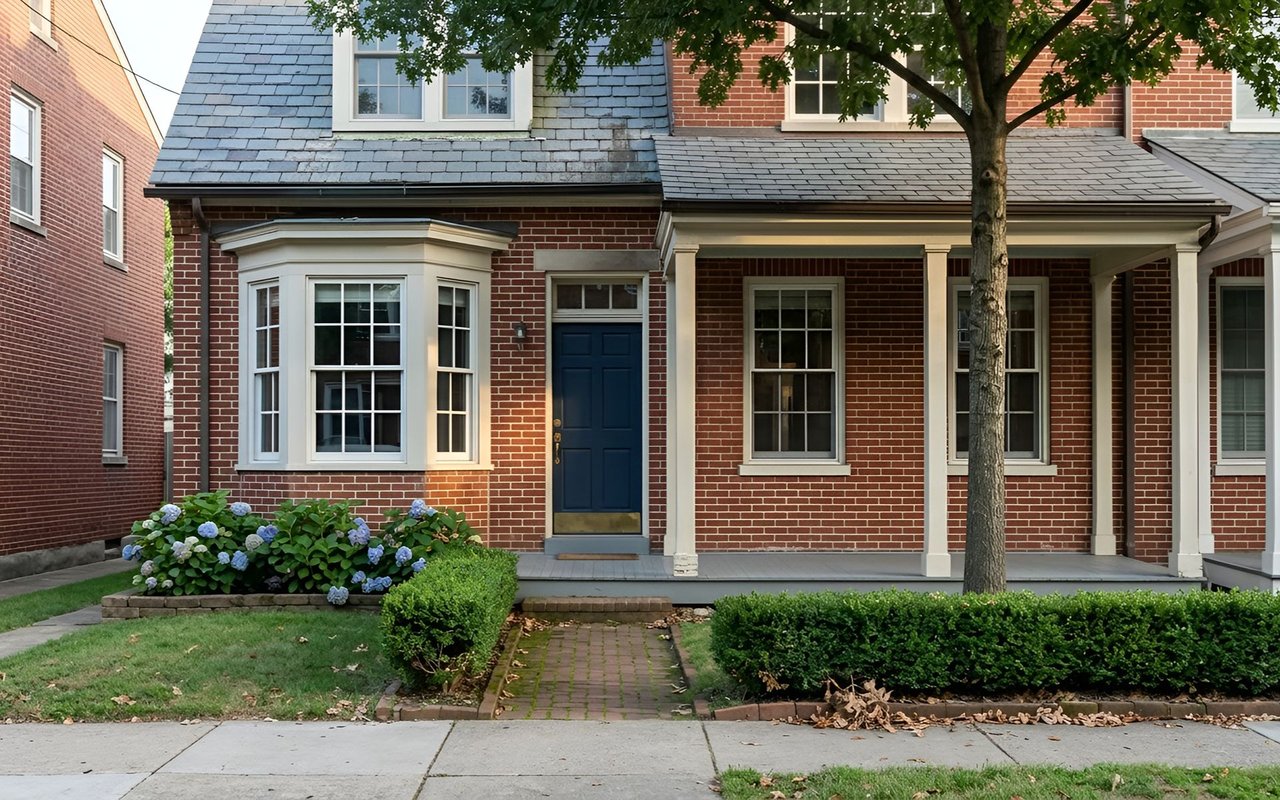
A house in 3a with a circular driveway and a two-car garage and a house in 4b sharing a wall with its neighbor can both be marketed as "Narberth" with identical enthusiasm. They are governed by entirely different rulebooks on lot coverage, parking, and what can legally replace the building next door.
The Fight Over Two of Them
In August 2025, Borough Council directed its Planning Commission to study how zoning could be used to address affordability and support the local economy. By February 2026, the commission had returned with a set of recommended changes focused on two districts: 4a, the residential ring around downtown, and 5b, the Montgomery Avenue commercial corridor, according to the Inquirer's March 2026 reporting.
The proposed changes are specific enough to matter to anyone comparing homes in or near these zones:
- In 4a, apartments, cottages, and rowhouses would be allowed by right, without the conditional-use hearing currently required. Height would rise from a 35-foot cap to 45 feet, and the parking requirement would drop from one space per unit to 0.7.
- In 5b, ground-floor apartments would be allowed for the first time alongside commercial space. Buildings could rise to four stories within the existing 45-foot limit, with a fifth story available to developers who set aside 10 percent of units as affordable housing.
Adam Krom, the Planning Commission's chair, has said the goal is to give developers more flexibility to build both market-rate and affordable units in places where similar buildings already exist. Borough Council president Fred Bush framed the stakes more bluntly in remarks reported by Montco.today.
"Narberth used to be relatively affordable, and that's no longer the case."
The affordable-unit trigger in these proposals is tied to Area Median Income for Montgomery County. In 2024, 80 percent of AMI worked out to about $91,000 for a family of four, a threshold explained in detail by the local newsletter Our Narberth, which has been tracking the process for residents alongside the borough's own filings.
Two Tracks, One Confusing Word
Here is where a buyer doing their own diligence can get tripped up. Narberth is running two separate zoning processes at once, and both use the word "zoning," which makes them easy to conflate.
One track is a recodification: a policy-neutral reorganization of the existing code meant to make it easier to read, not to change what it allows. The borough's own zoning ordinance page shows this track moving through a Finance and Administration Committee review on June 16, 2026, with Council set to consider adoption on July 16, 2026.
The other track is the substantive one: the actual 4a and 5b changes described above, the ones that would change height limits, parking ratios, and what's allowed by right. As of the Inquirer's most recent reporting on June 18, 2026, that debate was still described as ongoing, a "monthslong debate" over density, traffic, and neighborhood character with no final Council vote yet reported. The recodification is closer to refactoring old code. The 4a and 5b amendments are the ones that actually move property lines of possibility.
That distinction is the point. If you're evaluating a listing near downtown or along Montgomery Avenue today, the honest answer to "what can be built next door" is that it depends on a Council decision that may or may not have been finalized by the time you're reading this. The uncertainty itself is the diligence item, not a footnote to skip past.
What This Means If You're Comparing
Two Narberth listings priced within a few thousand dollars of each other can carry different practical realities depending on which district they sit in, and that's before accounting for whether either one borders 4a or 5b.
Before comparing two Narberth properties on price alone, it's worth asking:
- Which of the seven districts does this specific parcel sit in, and does that district's parking or lot-coverage rule match what's advertised as included?
- Is the property inside or adjacent to the 4a or 5b boundary, where by-right rules for apartments, height, and parking are currently under revision?
- Has the borough's Planning Commission or Council taken final action on the 4a and 5b amendments since this was written, and if so, what changed?
- For a home relying on street parking, is it on a block subject to the borough's residential parking permit system, and which of the three permit zones does it fall into?
None of these questions show up in a median price or a square-footage comparison. They show up in the borough's own zoning map and meeting record, and they are the difference between a comp that actually applies and one that only looks like it does.
Frequently Asked Questions
Does the zoning debate affect homes that already exist, or only new construction? The proposed changes govern what can be newly built or converted, primarily in the 4a and 5b districts. Existing single-family homes in districts like 3a are not the direct target of these amendments, though nearby redevelopment can still change the character of a block over time.
Is the recodification the same thing as the housing and parking changes? No. The recodification reorganizes the existing code without changing what it permits. The 4a and 5b amendments are a separate, substantive proposal that would change height limits, parking ratios, and by-right uses in those two districts specifically.
Where can I check on the current status of these zoning changes myself? Narberth Borough posts its zoning ordinance timeline, meeting documents, and open house materials directly on its building and zoning page, which is the most current public record available.
A half-square-mile borough with seven rulebooks and an active zoning fight is not a reason to avoid Narberth. It's a reason to compare listings on more than price per square foot. If you're weighing a specific address against what's actually allowed around it, right now, the Damon Michels Team can walk through the district, the pending changes, and what they mean for that particular lot before you make an offer.