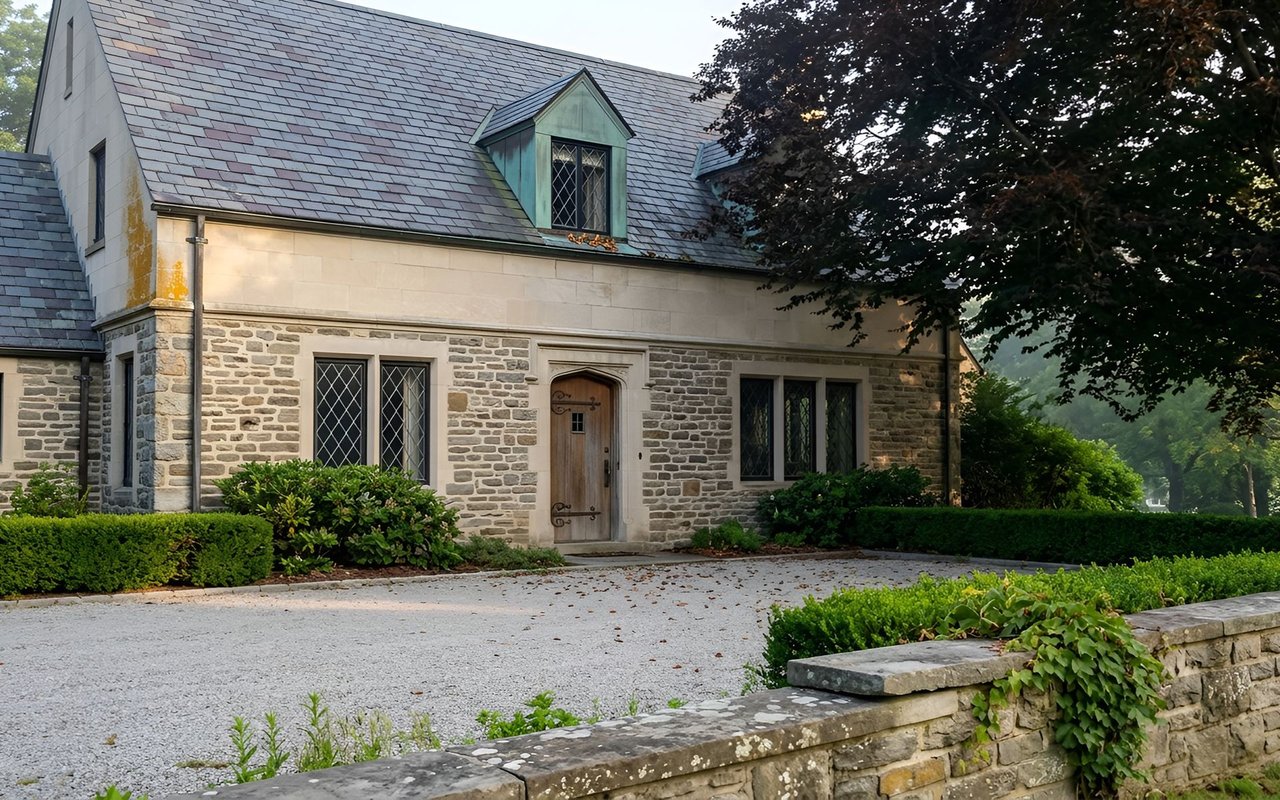
Gladwyne is known for stone colonials and Tudor estates tucked behind mature trees, but homes in the same ZIP code can have different utility arrangements. During a purchase, a title search or lender's checklist may bring those differences into focus: a home can use a different water or sewer system than one three doors down.
These differences are documented in Lower Merion Township's own sewer ordinance and Pennsylvania's state permitting records. Gladwyne, despite its single-ZIP-code identity, is legally divided into multiple separate sewer districts, and a meaningful number of its estate-tier properties still depend on private wells rather than the municipal water system. For a buyer comparing two houses on the same lane, that difference can mean different financing conditions, different inspection requirements, and a different long-term maintenance budget.
One Zip Code, Four Sewer Districts
Lower Merion Township's municipal code lays out its sanitary sewer system in blocks called sewer districts. Chapter 126, Article III of the township code sets District No. 1 as the default, covering the townshipwide system, and then carves out specific exceptions for areas that operate differently.
Within Gladwyne, the ordinance names three carve-outs from the general system:
District | What it covers | What it means for a buyer |
|---|---|---|
District No. 1 | The general township sewer system outside any carved-out zone | The baseline connection most buyers picture when they think "public sewer" |
District No. 2, Gladwyne/Villanova | The main built-up sewer service area for Gladwyne and neighboring Villanova | The system most people assume covers the entire community |
District No. 3, Idlewild | A named set of addresses on Waverly Road, Howard Road, and Idlewild Road | A narrow pocket handled as its own separate sewer arrangement, distinct from District No. 2 |
District No. 6, Mt. Moro Road | A cluster of properties along Mt. Moro Road | Another standalone carve-out inside Gladwyne, separate from the main district |
The ordinance doesn't explain why these particular streets got split out on their own, but the effect for a buyer is straightforward. If you're touring a house on Idlewild Road or Mt. Moro Road, the fact that the property sits in Gladwyne tells you almost nothing about how its wastewater actually gets handled. You have to check the specific address against the specific district, not the neighborhood's general reputation.
The Single-Residence Treatment Plant on Rose Glen Road
The ordinance describes districts.
A water quality management permit on file with the state, WQM Permit No. 4600431, authorized the construction and operation of a single residence sewage treatment plant at 1426 Rose Glen Road in Gladwyne, within Lower Merion Township, Montgomery County. That's not a septic tank and drain field. It's a small, dedicated treatment plant built to serve one house, documented in the Pennsylvania Bulletin.
Whether that specific plant is still active today isn't the point. The point is that Gladwyne's terrain, lot sizes, and distance from certain sewer lines have historically made this kind of individual arrangement not just possible but permitted by the state. A property with its own treatment plant carries its own repair costs. If you're evaluating an estate on a large lot in one of Gladwyne's less centrally located sections, this is exactly the kind of infrastructure question worth raising before you get too attached to the floor plan.
Private Wells on Some Gladwyne Properties
Water tells a similar story. Most of Lower Merion Township, Gladwyne included, receives water through Aqua Pennsylvania, which draws primarily from the Schuylkill River along with a number of supplemental wells. That's the default for homes closer to the village center and the more established blocks.
But Lower Merion Township maintains its own resource guide for residents with private drinking water wells, pointing them to Pennsylvania DEP resources for testing and maintenance. That page wouldn't exist if private wells weren't a real, ongoing part of the township's housing stock. Gladwyne's larger, more secluded lots, the ones on private and semi-private lanes that estate buyers specifically seek out for privacy, are exactly the kind of properties where a well is more likely than a municipal tap.
Pennsylvania doesn't regulate or test private wells on the state's behalf. The DEP's private well guidance places that responsibility on the homeowner, recommending annual bacteria testing and a broader panel every few years to catch hard water, iron, low pH, or bacteria before they become a bigger problem. A homeowner who has kept up with that testing has a paper trail to hand a buyer. One who hasn't leaves you starting from zero.
Utility Questions During the Purchase Process
A lender's underwriter may ask about a property's utility system as part of reviewing the purchase.
According to SepticAndWell.com, FHA and VA financing almost always require a septic inspection as a condition of closing when a property isn't on public sewer. If you're financing a Gladwyne purchase with either loan type and the property isn't on public sewer, confirm early whether an inspection will be part of your closing timeline.
Pennsylvania's Seller Disclosure Law, 68 Pa. C.S. § 7301 through 7315, requires sellers to reveal known material defects, and the standard state disclosure form specifically asks about sewage system type, age, and last service date. A seller who has maintained good records on a private system, whether that's a septic setup or something closer to the Rose Glen Road example, can actually use that history as a selling point. If records aren't available, a buyer may have less information about the system during the contract period.
Inspection costs for these systems aren't dramatic on their own. A standard septic inspection across Pennsylvania typically runs $300 to $900, often less than the cost of the appliances you're already planning to negotiate over. The inspection fee is one part of due diligence; identifying the need for an inspection early can help you plan for the purchase.
Four Questions to Ask Before You Write an Offer on a Gladwyne Property
- Which sewer district does this address fall under? Ask your agent to confirm this against the township's own sewer district map before you're deep into a contract, not after.
- Is the property served by Aqua Pennsylvania or a private well? If it's a well, request testing records going back at least a year, and budget for your own test if none exist.
- If there's a septic system or private treatment plant on site, when was it last inspected and pumped? Ask for the paperwork, not just a verbal answer.
- Does your loan program require a septic or well inspection as a closing condition? If you're using FHA or VA financing, confirm this early so you can account for it in your settlement timeline.
Frequently Asked Questions
Does Gladwyne Have Public Water and Sewer Everywhere?
Most of Gladwyne is served by Aqua Pennsylvania for water and falls within Lower Merion Township's Sewer District No. 2. But specific streets, including sections of Waverly Road, Howard Road, Idlewild Road, and Mt. Moro Road, are carved into their own separate sewer districts under the township code, and some estate properties on private lanes still rely on private wells rather than municipal water.
Is a Septic System or Private Well a Dealbreaker for Financing in Gladwyne?
Not usually, but it changes the process. FHA and VA loans typically require a septic inspection as a condition of closing. Conventional financing may not require it, but most buyers request one anyway given the cost of discovering a problem after closing.
How Do I Find Out Which Sewer District a Specific Gladwyne Address Falls Into?
The township's sewer ordinance names the exact addresses included in the carved-out districts. For any property you're seriously considering, this is worth confirming directly against the current township code rather than assuming based on the surrounding area.
Gladwyne rewards buyers who do their homework at the address level, not the neighborhood level. If you're comparing specific properties and want a clear read on what you're actually buying before you write an offer, the Damon Michels Team can walk through the utility, financing, and inspection details property by property, so you can make informed decisions throughout the purchase process.
This article is general information, not legal, tax or financial advice. Consult a qualified professional about your situation.